





🏆 Top 6 accounting tools for freelancers
Here is our selection of the best accounting tools for freelancers: Swapn, Indy, Legalplace, Numbr, Superindep and Acasi.




📊 Detailed comparison
Compare the key features of each tool at a glance.
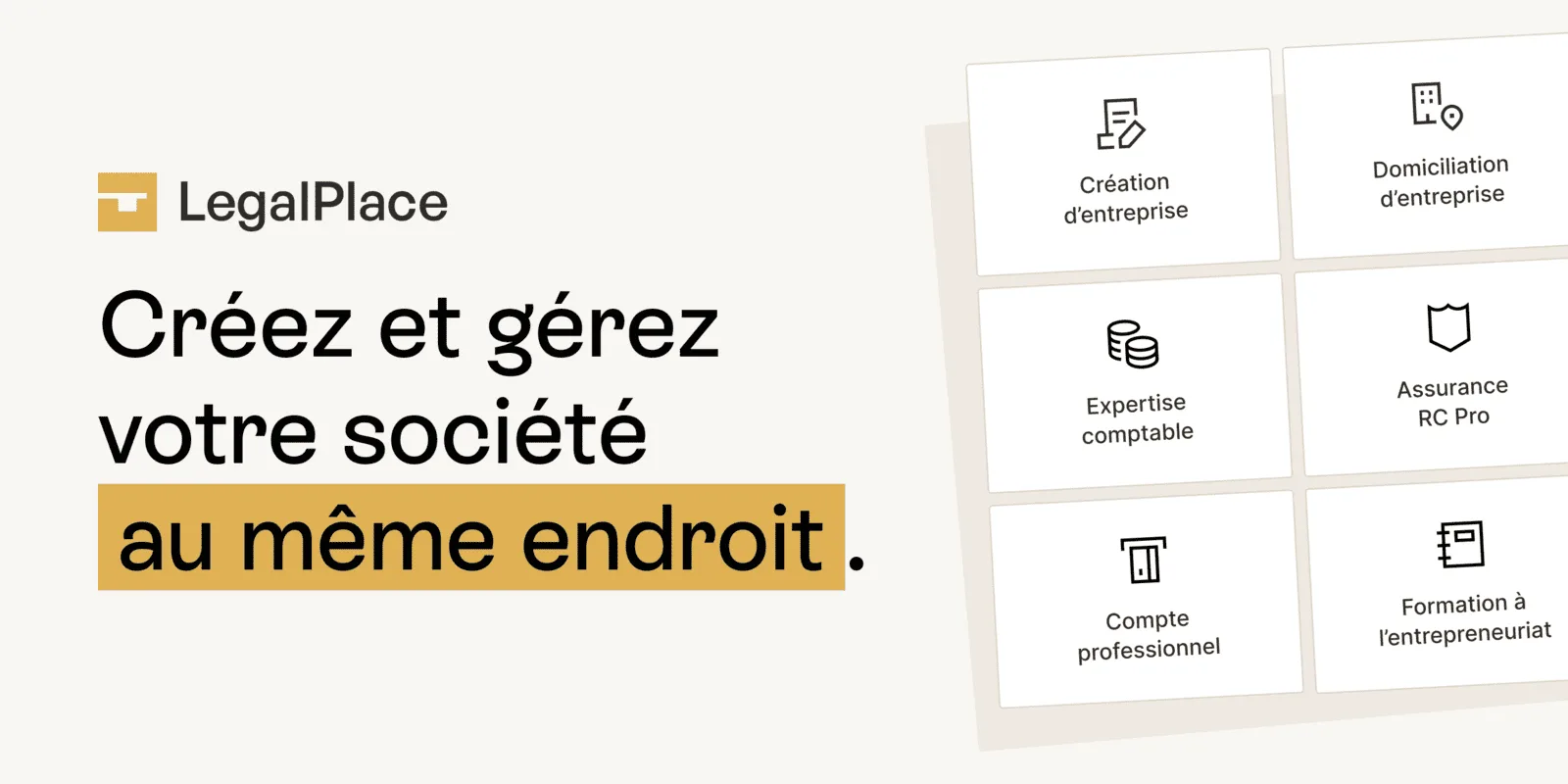
| Criterion |  Swapn Formation €0, accounting from €29 excl. VAT/month (French offer) |  Indy Free Essentiel plan, then from €9/month excl. VAT billed annually (French offer) |  LegalPlace Creation from €0 excl. VAT (legal fees extra), accounting from €39 excl. VAT/month, French offer |
|---|---|---|---|
| Free plan or trial | ✗ | ✓ | ✗ |
| Statuses covered | Companies + liberal professions | AE + companies (BNC, BIC, corporate tax) | Companies (EURL, SASU, SARL, SAS) |
| Dedicated accountant | ✓ | ✗ | ✓ |
| Full tax filings included | ✓ | ✓ | ✓ |
| Built-in invoicing | ✗ | ✓ | ✓ |
| Bank sync | ✓ | ✓ | ✓ |
- Free plan or trial
- ✗
- Statuses covered
- Companies + liberal professions
- Dedicated accountant
- ✓
- Full tax filings included
- ✓
- Built-in invoicing
- ✗
- Bank sync
- ✓
- Free plan or trial
- ✓
- Statuses covered
- AE + companies (BNC, BIC, corporate tax)
- Dedicated accountant
- ✗
- Full tax filings included
- ✓
- Built-in invoicing
- ✓
- Bank sync
- ✓
- Free plan or trial
- ✗
- Statuses covered
- Companies (EURL, SASU, SARL, SAS)
- Dedicated accountant
- ✓
- Full tax filings included
- ✓
- Built-in invoicing
- ✓
- Bank sync
- ✓
💡 Why a freelancer's accounting is not negotiable
Many freelancers think accounting can wait until the end of the year, or be botched with a spreadsheet. That is a mistake. French authorities are getting stricter, and the fines are not symbolic: €1,500 for a late VAT (TVA, the French sales tax) return, €750 for a forgotten income tax return, up to an 80% surcharge in case of bad faith. And with the e-invoicing reform rolling out from 1 September 2026 (obligation to receive e-invoices for all businesses), the slightest discrepancy will be more visible than ever to the tax authorities.
Beyond compliance, up-to-date books give you real visibility on your business: your monthly revenue, your margins, your actual daily rate after charges, your upcoming tax deadlines. It is the difference between a freelancer who runs their business and one who discovers the URSSAF (the French social security contributions body) bill three days before the deadline.
The real question is no longer “do I need to do my accounting” but “how do I do it with as little effort as possible”. 2026 tools let you go from 5 hours a month to 30 minutes a month on accounting, provided you pick the one that matches your status and your level of complexity.
The legal risk
Poorly kept books or late filings can cost you €1,000 to €5,000 a year in penalties. For companies, the absence of a certified annual balance sheet can lead to being struck off by the commercial court.
The management risk
Without an up-to-date dashboard, you are flying blind: you invoice without knowing whether you are really making money, you accept loss-making assignments without realising it, you forget to set money aside for the URSSAF or corporate tax (IS).
The time risk
A freelancer who does their accounting by hand spends 5 to 10 hours a month on admin. Over a year, that is 60 to 120 unbilled hours, the equivalent of 3 to 6 thousand euros of lost revenue, far more than the cost of a tool or an accountant.
🔍 The 4 main categories of freelance accounting tools in 2026
Tools are not equal depending on your status. Here is how to sort them so you do not get it wrong.
📊Pure software for micro-entrepreneurs
- What it covers
- 100% self-service tools designed for the micro regime: revenue tracking, automatic calculation of URSSAF contributions, quarterly or monthly return in one click, threshold tracking (VAT, revenue ceiling). No human accountant, but few people really need one for this status.
- Who is it for?
- Auto-entrepreneurs with a standard activity (services, trade, intellectual services) who want to handle their accounting alone without paying an accountant.
- How much it costs
- €0 to €20 a month depending on features. Indy has a free plan, Superindep starts at €19 a month with a dedicated advisor.
🔄Hybrid software for simple BNC and BIC
- What it covers
- More complete tools that handle both micro accounting and the simplified real regime: 2035 and 2042-C-PRO returns, VAT (CA3 or CA12), simplified balance sheet. The focus remains on automation, with an optional accountant.
- Who is it for?
- Freelancers who exceed the micro thresholds or deliberately choose the simplified real regime to deduct their expenses. Particularly suited to BNC (liberal professions: consultants, developers, independent designers).
- How much it costs
- €9 to €25 excl. VAT a month. Indy Plus at €9 a month covers most BNC needs. Tiime Smart at €17.99 a month for BIC.
👤The digital accountant for companies
- What it covers
- An online firm with a dedicated human accountant who takes care of everything: certified annual balance sheet, corporate tax returns, VAT, payroll (if you have employees), strategic advice. You send your invoices and bank statements, they handle the rest.
- Who is it for?
- All companies (SASU, EURL, SARL, SAS), especially those with specific needs (intra-EU VAT, payroll, foreign expenses) or high revenue. The cost is largely offset by the security and time saved.
- How much it costs
- On quote, generally €50 to €250 excl. VAT a month depending on complexity. Acasi at €119 a month all-inclusive, Swapn as a partner offer, LegalPlace ComptaPlace and Numbr on quote.
🏛️The traditional accountant
- What it covers
- A physical firm with in-person appointments. More expensive and more formal, but useful if you need very personalised support, specialised sector expertise, or if you work B2B with large accounts that appreciate this “seriousness” signal.
- Who is it for?
- Companies with complex tax issues (holdings, international structures, advanced tax optimisation) or freelancers who prefer face-to-face contact.
- How much it costs
🧮 Anticipate your charges and your net income with our simulators
Before even choosing software, know how much you will really pay in charges and keep as net income.
Micro-entreprise charges simulator
URSSAF contributions, tax and CFE: calculate what you pay out based on your revenue and activity.
Net salary simulator
Convert your revenue into real net income, charges and tax included.
VAT simulator
Check the exemption thresholds and calculate the VAT to pay once you are liable.
Status comparator
Micro, EURL or SASU: compare the net income of each status based on your revenue.
🧭 How to choose your freelance accounting tool
Five concrete criteria that make the difference, beyond the advertised price.
- 1
Coverage of your legal status
Not all tools cover all statuses. Superindep is 100% specialised in micro-entrepreneurs: if you move to a SASU, you have to change tool. Acasi does not take auto-entrepreneurs. Indy covers everything from micro to company. Before signing, check that the tool supports your current status AND your future status if you plan to evolve.
- 2
Software only vs accountant included
Pure software (Indy, Superindep) requires you to understand the basics: where to book an expense, how to classify a receipt, when to set money aside. A digital accountant (Acasi, Swapn, Numbr, LegalPlace) takes everything on and advises you. Choose according to your tolerance for admin time and your comfort with tax. The “right” choice depends on you, not on the tool.
- 3
The scope of included filings
Read carefully what is included in the package. Monthly VAT return (CA3)? Annual (CA12)? Income return (2035 or 2042-C-PRO)? Certified balance sheet? CFE (the French business property tax)? Payroll? Some digital “accountants” exclude payroll or charge extra for one-off filings. Ask for a detailed quote before signing.
- 4
Bank sync and integrations
You will lose 50% of your time if the tool does not connect to your bank to categorise expenses automatically. Check that your business account (Qonto, Shine, Propulse, Blank) is supported through direct sync (Bridge API). Indy, Superindep, Acasi, Swapn and Numbr (via Tiime) all have their own syncs. Avoid manual CSV imports.
- 5
The ability to get your data back
Before signing, ask how you can export all your data (invoices, accounting entries, supporting documents) if you change tool. Good tools allow a full export in FEC format (Fichier des Écritures Comptables, the accounting entries file required by the tax authorities). If the export is unclear, be wary: you could end up locked in.
💰 How much does freelance accounting cost in 2026?
The price varies with your status and the level of service. Here are the realistic ranges.
The basic rule: the more complex your status (company > real regime > micro), the more it pays to outsource. For a micro-entrepreneur, paying more than €20 a month for accounting is generally excessive. For a SASU, paying less than €100 a month often hides limitations (payroll not included, balance sheet as an option). The fees are 100% deductible under the real regime or corporate tax. Under micro, they are not individually deductible (covered by the flat-rate allowance).
Free Indy is enough for basic tracking. Superindep at €19 a month if you want a dedicated advisor and automated URSSAF declaration.
Indy Plus at €9 excl. VAT a month covers the 2035 return, VAT and the simplified balance sheet. You do everything yourself, but the tool guides you step by step.
Acasi at €119 a month all-inclusive, or a digital accountant on quote. Certified balance sheet, corporate tax, VAT and strategic advice included.
Digital or traditional accountant: Numbr, LegalPlace, or a local firm. Payroll, intra-EU VAT and specific filings push the bill up.
🎯 Which tool to choose based on your status and profile?
💼Beginner auto-entrepreneur or low revenue
If you are starting as a micro-entreprise with modest revenue (under €30k a year), you have almost nothing to declare for tax: a receipts book, a quarterly or monthly revenue declaration to the URSSAF, and that is it. Indy's free plan is more than enough. No need to pay €19 a month for Superindep or more. You can move up a tier if you want personalised advice or if you are approaching the VAT thresholds.
🌱Established auto-entrepreneur close to the thresholds
If you are approaching the VAT ceiling (€39,100 for services in 2026) or the micro regime ceiling (€77,700), you need to plan for the switch. Superindep or Indy Plus alert you automatically and guide you through VAT (mandatory mention on invoices, CA3 returns). Expect €9 to €19 a month. At this stage, the investment pays for itself many times over.
🚀Freelancer on the simplified real regime (BNC or BIC)
If you have moved to the real regime to deduct your actual expenses, your accounting becomes more technical: you must keep a general ledger, handle depreciation, manage VAT, and fill in the 2035 (BNC) or 2031 (BIC) return. Indy does all of this 100% automatically from €9 a month for BNC. For BIC, Tiime (covered in invoicing) or Indy as well. If you feel overwhelmed, a digital accountant on quote is a good option.
🔧Company (SASU, EURL, SARL) needing an accountant
For a company, complexity goes up a notch: certified annual balance sheet required, corporate tax return, payroll if you have employees, VAT, various taxes. Having an accountant is not mandatory but almost indispensable. Acasi (€119 a month all-inclusive) is very popular with SASU/EURL owners. LegalPlace ComptaPlace and Numbr (on quote) are solid alternatives. Expect €50 to €250 a month depending on complexity.
👨👩👧Freelancer who wants to handle everything themselves (DIY)
If you like accounting, want to understand every line and refuse to pay €100 a month for a human to do what you can do yourself, Indy is your best option, whatever your status. It is the only tool that covers everything from micro to corporate tax without requiring an accountant. Expect €9 to €25 a month, and 2 to 4 hours a month of your own time.
🏁 Our verdict: which tool for which profile?
Here is which tool to pick for your exact situation.
Covers 95% of an auto-entrepreneur's needs: receipts tracking, URSSAF declaration, invoices compliant with the 2026 reform, bank sync. Free, no commitment. You only pay €9 a month later if you move to the real regime or a company.
A long-standing 100% micro-entrepreneur specialist. €19 a month for a dedicated human advisor, automated URSSAF declaration, VAT and CFE tracking. Ideal for artist-authors too.
Unbeatable value: €9 excl. VAT a month to manage all the accounting of a BNC on the real regime (2035 return, VAT, simplified balance sheet). The only tool that takes you from micro to company without changing platform.
A named accountant (the same person for years), all-inclusive package at €119 a month, certified balance sheet, corporate tax, VAT, strategic advice. More expensive than the quote-based competition, but zero bad surprises and zero paperwork on your side.
Frequently asked questions
No, it is never a legal obligation. But it largely depends on your status: an auto-entrepreneur can perfectly well manage their accounting alone with a free tool. For a company (SASU, EURL, SARL), an accountant is almost indispensable for the certified annual balance sheet, corporate tax and specific filings. Under the real regime (BNC or BIC), you can choose: Indy lets you manage everything yourself from €9 a month, or you can delegate to a digital accountant.
From €0 a month (free Indy for auto-entrepreneurs) to €300 a month (digital accountant for complex companies). Typical ranges: €0-20 a month for micro-entrepreneurs, €9-25 a month for freelancers on the real BNC/BIC regime, €50-130 a month for a SASU/EURL on a standard package, €150-300 a month for companies with employees or international activity. Under the real regime, these fees are 100% deductible.
The receipts book must record, in chronological order: the date of payment received (not the invoice date), the client's identity, the precise nature of the service or goods sold, the amount received, and the payment method (cash, card, transfer, cheque). It must be kept continuously, without erasures, and retained for 10 years. All auto-entrepreneur tools (Indy, Superindep, Abby, Freebe) generate it automatically.
Yes, as soon as you are liable for it. Modern tools automatically calculate the applicable rates (20%, 10%, 5.5%, intra-EU exemption, non-EU), generate CA3 (monthly) or CA12 (annual) returns, and allow direct online payment to the DGFiP (the French tax authority). Indy, Tiime, Superindep and all digital accountants do this without any problem. Just check that the tool supports your exact regime (simplified real vs normal real).
Yes, it is legally free. But it is technically tricky if you are not careful. The trap: you must export all your accounting entries in FEC format, import them into the new tool, and make sure the balances at the time of the switch are identical on both sides. Most tools offer assisted migration. Ideal: switch at the start of a fiscal year (1 January), which simplifies everything.
It depends on your profile: if you are an auto-entrepreneur or a simple BNC, pure software (Indy, Superindep) is more than enough and costs 10x less. If you are in a company (SASU, EURL, SARL), especially with revenue above €100k or employees, the digital accountant (Acasi, Swapn, Numbr, LegalPlace) pays for itself within a few months through strategic advice and time saved. The rule: as long as you understand your obligations, pure software; as soon as you feel overwhelmed, a human expert.
Three differences: (1) the channel: digital runs via chat, email and video call; traditional via in-person appointments at the firm; (2) the price: digital €50-200 a month flat fee, traditional €1,000-3,000 a year; (3) the specialisation: digital is optimised for standard statuses (SASU, EURL), traditional is better for complex cases (holdings, international, regulated sectors). For 95% of freelancers, digital is enough and much cheaper.
Read the contract before signing. Many “all-inclusive” offers actually exclude: payroll (often extra at €20-50 per employee per month), one-off filings (creation/closure, changes to the articles of association), and advanced strategic advice (tax optimisation, structuring). Ask for a detailed quote with the precise list of filings covered and excluded. Acasi is one of the few to offer a true all-inclusive fixed-price package.
The free reference is Indy: its €0 plan covers the mandatory receipts book, revenue tracking, URSSAF declaration and bank sync, which is more than enough for an auto-entrepreneur with a standard activity. Be wary of so-called “free” tools that are actually limited to invoicing, without the accounting part. As soon as you move to the real regime (expense deduction, VAT, balance sheet), you need a paid plan (Indy Plus from €9 excl. VAT a month) or an accountant. Superindep and Acasi have no free plan but include a dedicated advisor.
They are two different approaches. Indy is software you run yourself: you classify your transactions, the tool automates the returns (2035, VAT, simplified balance sheet), from €9 excl. VAT a month and with a free plan for auto-entrepreneurs. Dougs is an online accountant: a human firm takes over your accounting and certifies your balance sheet, more reassuring for a company, but more expensive. Simple rule: Indy if you are comfortable managing it yourself (micro or BNC on the real regime), Dougs or another digital accountant (Swapn, Acasi) if you are in a company and want to delegate everything.